← The Wingmakers Ways · Astronomy & Exoplanets
Archived page · Checkable
Earth And Moon
Moons_Orbit_Around_the_Earth.html · captured from wingmakers.co.nz
The Moons Orbit Around Earth
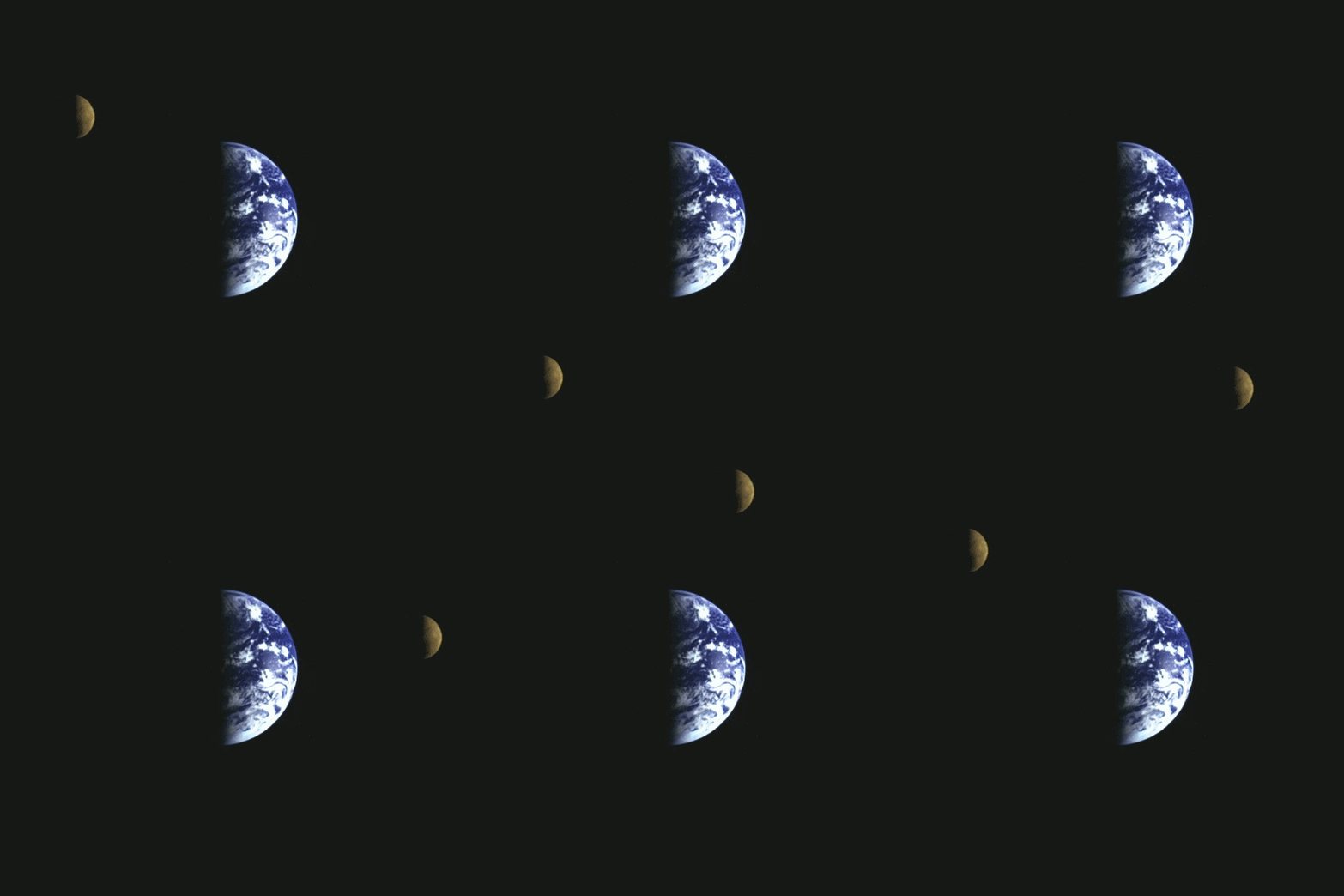
The Moon's Orbit and Rotation
The Earth's Moon is the fifth largest in the whole solar system, and is bigger than the planet Pluto. The Moon has a nearly circular orbit (e=0.05) which is tilted about 5° to the plane of the Earth's orbit. Its average distance from the Earth is 384,400 km. The combination of the Moon's size and its distance from the Earth causes the Moon to appear the same size in the sky as the Sun, which is one reason we can have total solar eclipses.
It takes the Moon 27.322 days to go around the Earth once. Because of this motion, the Moon appears to move about 13° against the stars each day, or about one-half degree per hour. If you watch the Moon over the course of several hours one night, you will notice that its position among the stars will change by a few degrees. The changing position of the Moon with respect to the Sun leads to lunar phases.
Have you ever heard the term the 'far-side' of the Moon? Because of the effect on the Moon of tidal forces due to the Earth, the same side of the moon always faces the Earth. In other words, it takes the Moon the same amount of time to rotate around once as it does for the Moon to go around the Earth once. Therefore, Earth-bound observers can never see the 'far-side' of the Moon. Tidal forces cause many of the moons of our solar system to have this type of orbit.