← The Wingmakers Ways · Astronomy & Exoplanets
Archived page · Checkable
Pavo
Pavo.html · captured from wingmakers.co.nz
Pavo 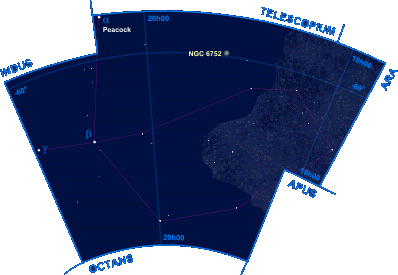
The Peacock
Myth
Pavo, the peacock, is a modern constellation created by Johann Bayer and published in 1603 in his famous Uranometria atlas. Modern though it is, he perhaps thought of the famous Argus Panoptes (the all seeing Argus) of one hundred eyes, tasked with guarding Io when... but I get ahead of myself.
Io, sometimes called Callithyia, was the chief priestess of Hera. Hera's husband, Zeus, fell in love with her, and changed her into a white heifer to protect her from his jealous wife. Hera is many things, but she is not stupid. She persuaded Zeus to give her the cow, and tasked Argus Panoptes to guard her. Argus was a little different from you and me; he was a giant covered with one hundred eyes from head to foot.
Zeus, unhappy with this arrangement, sent fleet-footed Hermes to lull the creature to sleep and kill it. Hera took Argus' eyes and placed them on the tail of the peacock.
Hera, never one to give up, sent a gadfly to torment Io, who wandered over all the earth trying to escape her tormenter. She crossed the Ionian Sea, swam the Bosphorus (the ford of the Ox), and reached Egypt, where she again became human, and bore a son named Epaphus.
We often identify Io with the Egyptian goddess Isis. Hera later carried off Epaphus to Byblos in Syria. Io searched for him and found him, and she merged there with the Canaanite goddess Astarte.
As for the unfortunate Argus Panoptes, peacocks run wild in certain places on Oahu in Hawaii, including one of the HAS viewing sites. Their haunting calls echo frequently off the mountains as the stars wheel overhead.
Lying on the fringes of the Milky Way, Pavo is lacking in bright objects apart from its primary star, itself called Peacock. It contains various clusters, of which NGC 6752 is the only one visible to the naked eye. 
The region of space described by Pavo is largely 'beneath' the galactic disc, but it does contain a number of extragalactic globular clust
NGC 6752 is a splendid globular cluster, large and bright and compact. It's about ten degrees WSW of alpha Pav (omega Pav is just west to the west). It might be easier to find it four degrees north of NGC 7644. This cluster is considered one of the closest globulars, at about 20,000 light years away.
NGC 6744 is a very large and fairly bright barred spiral galaxy. The galaxy is found three degrees SE of lambda Pavonis.
Two faint, dusty spiral arms emerge from the outer edge of the blue ring and are seen silhouetted against the golden light of older and fainter stars. A scattering of blue stars at the outer edge of NGC 6782 in the shape of two dim spiral arms shows that some star formation is occurring there too. The inner ring surrounds a small central bulge and a bar of stars, dust, and gas. This ring is itself part of a larger dim bar that ends in these two outer spiral arms. Astronomers are trying to understand the relationship between the star formation seen in the ultraviolet light and how the bars may help localize the star formation into a ring.
NGC 6782 is a relatively nearby galaxy, residing about 183 million light-years from Earth. The light from galaxies at much larger distances is stretched to longer, redder wavelengths ["redshifted"], due to the expansion of the universe. This means that if astronomers want to compare visible-light images of very distant galaxies with galaxies in our own neighborhood, they should use ultraviolet images of the nearby ones. Astronomers find that the distant galaxies tend to have different structures than nearby ones, even when they use the correct procedure of comparing visible light in distant galaxies with ultraviolet light from nearby ones. Since the distant galaxies are seen as they were billions of years ago, such observations are evidence that galaxies evolve with time.
Planetary Destination In Pavo
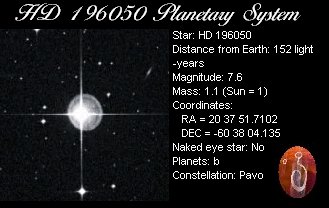
MAPPING TECHNIQUE
VISUAL EXERCISE : Two Person Exercise.
DESTINATION : Your Choice
STEP ONE
Traveller : Get comfortable and relax.
STEP TWO
Traveller : Charge your physical body with light energy.
STEP THREE
Traveller : See your visual body standing in front of your physical body and prepare your visual body for interstellar travel with a Interstellar Protection Shield.
STEP FOUR
Traveller : See your visual body filling with light energy.
STEP FIVE
Traveller : Focus your mind on teleporting your visual body to the Your Destination.
STEP SIX
Traveller : Then see your visual body teleporting to the Your Destination.
STEP SEVEN
Traveller : When you arrive in the destination Look around can you see any planets or moons in the System? If not use the Interstellar Planetary Detection Rapid and see if you can detect any planets or moons in that system.
STEP EIGHT
Traveller : If you can see or detect a planet or moon using Telekinesis or Teleportation move towards the planetary body.
STEP NINE
Traveller : When you arrive at the outer atmosphere of the planet or moon stop and ask your spiritual guide to tell you the name of this planet or moon.
Traveller : Tell the mapper the name of the planet or moon. Also tell the mapper all you can about the planet or moon.
STEP TEN
Then us the Core Comparison Crystal Technique to perform a core reading on this planet or moon and give the mapper your reading on this planet or moon
STEP ELEVEN
Traveller : Then levitate or Teleport your visual body to the surface of the planet or moon.
STEP TWELVE
Mapper : When the traveller arrives on the surface ask the following questions.
Is there any plant life or water on the surface of the planet or moon that you can see? Is there an atmosphere around this planet or moon? Is the atmosphere an match with earths atmosphere?
Mapper : Write down the answers to these questions.
PLANETARY DATA FILE 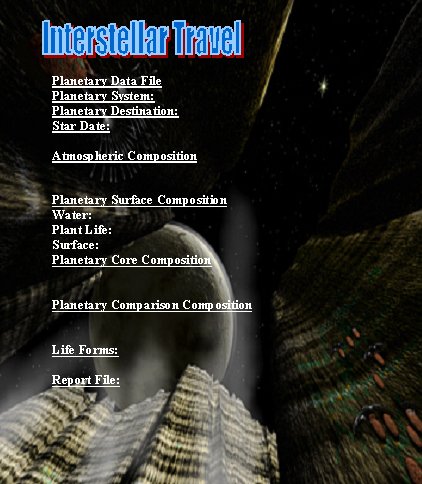
STEP THIRTEEN
Traveller : When you are finished on the surface teleport your visual body to the nearest planetary body that you can see in that Galaxy.
STEP FOURTEEN
Traveller and Mapper : Follow steps nine through to twelve again till you have mapped out the whole Galaxy.
STEP FIFTEEN
Traveller : When you have finished mapping the Galaxy teleport your visual body back to your physical body back on earth.
REMEMBER
When you are travelling if you come across an alien race that you think may be friendly feel free to make contact with that alien race.
IMPORTANT
When you are contacting alien races always be ready to teleport if there is trouble.
MAPPER
Make a note of any planets or moons with an atmospheric match with earths. That way you both know which planets can support human life forms.
MAPPER & TRAVELLER
To check that your mapping of that Galaxy is correct by changing roles and do this exercise again. Also remember to check for life force energy around the planets or moons that you visit on your journeys. Because if you can feel life force energy that means the planet or moons is a real planet or moon.