← The Wingmakers Ways · Astronomy & Exoplanets
Archived page · Checkable
55 Cancri Solar System
55_Cancri_Solar_System.html · captured from wingmakers.co.nz
55 Cancri Solar System
Interstellar Card
CONSTELLATION: Cancer
Name
Cosmic Ray
Sign
Energy
Comments
Unknown
7th Cosmic Ray
Mass Life
Veiling the Christ
This graphic depiction compares our solar system with a newfound planetary system, 55 Cancri. The new system has a Jupiter-mass planet in an orbit similar to the orbit of our Jupiter. In addition, two other planets are shown orbiting 55 Cancri at distances closer than the distance between Earth and our Sun. CREDIT: NASA/JPL
The circle shows the location of the class G star 55 Cancri (in the constellation Cancer), also known as Rho-1 Cancri. The circle is actually centered on two stars that are not separated at the photo's resolution. The eastern one is 55 Cancri, the western 53 Cancri. The planet orbits 55 Cancri in only 14.6 days (16 percent that of Mercury's orbital period around the Sun), has at least 0.84 times the mass of Jupiter, and is 0.11 astronomical units from the star. That is only 16.5 million kilometers, 10.2 million miles, or 28 percent Mercury's distance from the Sun.
System Components
(Mass In Multiples Of Jupiter's Mass)

The star, 55 Cancri in the constellation Cancer, was already known to have one planet, announced by Butler and Marcy in 1996. That planet is a gas giant slightly smaller than the mass of Jupiter and whips around the star in 14.6 days at a distance only one-tenth that from Earth to the Sun.
Using as a yardstick the 93-million mile Earth-Sun distance, called an astronomical unit or AU, the newfound planet orbits at 5.5 AU, comparable to Jupiter's distance from our Sun of 5.2 AU (about 824 million kilometers or 512 million miles). Its slightly elongated orbit takes it around the star in about 13 years, comparable to Jupiter's orbital period of 11.86 years. It is 3.5 to 5 times the mass of Jupiter.
"We haven't yet found an exact solar system analog, which would have a circular orbit and a mass closer to that of Jupiter. But this shows we are getting close, we are at the point of finding planets at distances greater than 4 AU from the host star," said Butler. "I think we will be finding more of them among the 1,200 stars we are now monitoring."
The team shared its data with Dr. Greg Laughlin, assistant professor of astronomy and astrophysics at the University of California, Santa Cruz. His dynamical calculations show that an Earth-sized planet could survive in a stable orbit between the two gas giants. For the foreseeable future, existence of any such planet around 55 Cancri will remain speculative.
"The existence of analogs to our solar system adds urgency to missions capable of detecting Earth-sized planets - first the Space Interferometry Mission and then the Terrestrial Planet Finder," said Dr. Charles Beichman, NASA's Origins Program chief scientist at the agency's Jet Propulsion Laboratory, Pasadena, Calif.
"This planetary system will be the best candidate for direct pictures when the Terrestrial Planet Finder is launched later this decade," said UC Berkeley astronomer Dr. Debra A. Fischer.
Marcy, Butler, Fischer and their team also announced a total of 13 new planets today, including the smallest ever detected: a planet circling the star HD49674 in the constellation Auriga at a distance of .05 AU, one-twentieth the distance from Earth to the Sun. Its mass is about 15 percent that of Jupiter and 40 times that of Earth. This brings the number of known planets outside our solar system to more than 90.
Discovery of a second planet orbiting 55 Cancri culminates 15 years of observations with the 3-meter (118-inch) telescope at Lick Observatory, owned and operated by the University of California. The team also includes Dr. Steve Vogt, University of California, Santa Cruz; Dr. Greg Henry, Tennessee State University, Nashville; and Dr. Dimitri Pourbaix, the Institut d'Astronomie et d'Astrophysique, Université Libre de Bruxelles.
The star 55 Cancri is 41 light years from Earth and is about 5-billion years old. Further data are needed to determine whether yet another planet is orbiting it, because the two known planets do not explain all the observed Doppler wobbling. One possible explanation is a Saturn-mass planet orbiting about .24 AU from the star.
Speculations
Like the planet of 51 Pegasi, 55 Cancri b is a massive planet orbiting extremely close to its sun. Although the two planets probably share much in common, the small differences in mass and distance may make them significantly different. Both worlds are massive enough to maintain atmospheres, but the close proximity to its star may boil away any atmosphere around 51 Pegasi b. This may not be the case for 55 Cancri b, which lies twice as far away from its sun. But the closer a planet is to its star, the larger amounts of heavy elements are available during formation. So, like 51 Pegasi b, 55 Cancri b may have a substantial rocky core. The result of a massive rocky core and a jovian atmosphere is like a hybrid between Venus and Jupiter.
The sources of heat on 55 Cancri b are varied and immense. The intense heat of the close sun contributes greatly, but there is more to it than that. As on 51 Pegasi b, the tidal forces of such a close orbit to a star may make 55 Canceri b's rocky core extremely tectonically active, forming numerous volcanoes. Depending on how torturously hot the surface gets and how much pressure is created by the thick atmosphere, the "rocky" surface may be entirely molten. Outgassing due to the intense volcanism on 55 Cancri b would unleash large amounts of carbon dioxide, water, and sulfur dioxide into the atmosphere, tinting the clouds yellow, as on Venus. All of these are greenhouse gases, which would prevent the already scortching heat from escaping into space.
55 Cancri b would be a volcanically hyperactive world with a run away greenhouse effect positioned uncomfortably close to its sun. Such a world would be inconceivably hostile to life as we know it. Near the surface, sulfuric acid rains may plumet into seas of molten rock. Super bolts of lightning from Earth sized sulfurous clouds may flash on the night side of the planet and titanic volcanoes may throw liquid rock for thousands of miles. Any moons, if they exist, of 55 Cancri b would be as barren as Mercury, blazing in the heat of the sun.
Newly Discovered Planet Found In The 55 Cancri Solar System
55 Cancri e 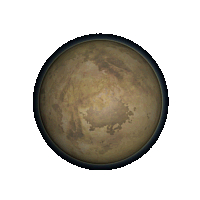
Epistellar Superearth
Statistics
Star System: 55 Cancri
Discovery Status: Confirmed
Mass: 14.2 Earths
Average Distance: 0.038 AUs
Period: 2.81 Days
Orbital Eccentricity: 0.174
Argument of Perihelion (omega): 261.7°
Detection Method: Doppler Spectroscopy
Discovered By: McArthur et al
Year Discovered: 2004
Planetary Orbit Of 55 Cancri E
55 Cancri B 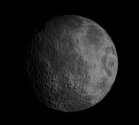
Statistics
Star System: 55 Cancri b
Discovery Status: Confirmed
Mass: 0.84 Jupiters
Average Distance: 0.115 AUs
Period: 14.653 Days
Orbital Eccentricity: 0.02
Tug on Star: 72.2 m/s
Average Temperature: 630 Kelvin
Detection Method: Doppler Spectroscopy
Discovered By: Marcy and Butler
Year Discovered: 1996
55 Cancri C 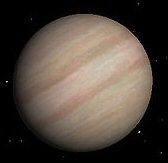
Planetary Statistics
Star System: 55 Cancri
Discovery Status: Confirmed
Mass: 0.21 Jupiters
Average Distance: 0.24 AUs
Period: 44.28 Days
Orbital Eccentricity: 0.34
Tug on Star: 13 m/s
Detection Method: Doppler Spectroscopy
Discovered By: Butler et al.
Year Discovered: 2002
55 Cancri D 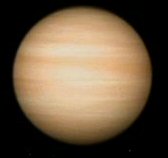
Planetary Statistics
Star System: 55 Cancri
Discovery Status: Confirmed
Mass: 4 Jupiters
Average Distance: 5.9 AUs
Period: 2785 Days
Orbital Eccentricity: 0.16
Tug on Star: 49.3 m/s
Detection Method: Doppler Spectroscopy
Discovered By: Butler et al.
Year Discovered: 2002
55 Cancri Kuiper Belt
Kuiper Belt 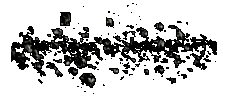
Statistics
Star System :55 Cancri
Discovery Status :Imaged
Minimum Distance : 27 AUs
Maximum Distance :44 AUs
Detection Method :Imaging
Discovered By : D. E. Trilling and R. H. Brown
Year Discovered : 1998
Planetary Orbits In the Cancri System 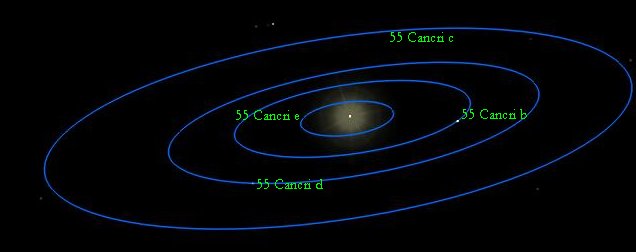
Position In Cancer
Post