← The Wingmakers Ways · Astronomy & Exoplanets
Archived page · Checkable
Nibiru
Nibiru.html · captured from wingmakers.co.nz
Nibiru
Nibiru is the tenth planet in our solar system and orbit the sun once every 5 million years
Solar System
Moons
Nibiru is the tenth planet in our solar system and orbits the sun once every 5 million years and has an elliptical orbit that crosses close to our own orbit from time to time.
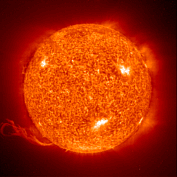
Location
System:
Spectral Type:
G2 V
Mass:
1 Solar Masses
Radius:
1 Solar Radii
Effective Temperature:
5860 Kelvin
Age:
4600 Million Years
Habitability
Inner Edge of Habitability Zone:
0.51 AU
Outer Edge of Habitability Zone:
1.6 AU
Nibiru
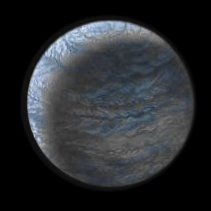
Nibiru Statistics
Object Type:
Methane Cloud Jovian
Parent Star:
Sol (G2 V)
Discovery Status:
Uncertain
Mass :
3 Jupiters
Orbital Period:
5 Million Years
Mean Distance:
25000 AU
System Age:
4600 Myr
Planet Appearance:
Blue with methane clouds and hazes
Estimated Radius:
1.04 Jupiters
Estimated Mean Temp:
1 Kelvin
Temp from Internal Heating :
159.146 Kelvins
Mean Angular Star Size:
0 Degrees
Gravitational Influence (Hill Sphere):
2461.612 AU /
368252450000 km
Max Stable Prograde Moon Orbit:
886.18 AU /
132570880000 km
Max Moon Mass:
> 10 Earths
Year Discovered:
1999
Detection Method:
Inferred from Cometary Orbit Perturbations
Discovered By:
Independantly by Murray and Matese
Nibiru Orbit Around Our Sun
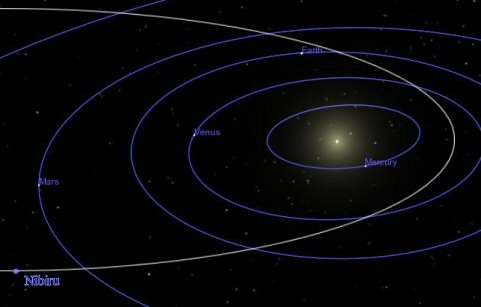
Nibiru has an elliptical orbit as it comes close to our sun. It's orbit crosses paths with the orbits of the inner planets
It is believed that Nibiru will enter the inner solar system in the year 2012 and will leave in 2033 and there is a chance that it will pass very close to earth bring about a polar shift.
It is also believed that this pattern occurs every 10 million years, which is around the same time that the earth last had an ice age.
I and the other members of the seven have had visions of this polar shift taking place in 2033, And know that it is due to the passing of a large celestial object passing very near to the earth that the polar shift takes place.
You can learn more about this process on the page titled Events That Causes Ice Ages On Earth And Mobis
Greeting cards, poetry, santa letters, gifts books, and more!
Books
Reflections Of the Heart
Whispers of the soul
Silhouette
Seasons-Change
Online Books Stores
NZ.bookshop.co.nz
The Book Depository.co.uk
Fishpond.co.nz
Directories
Christchurch Business N.Z
International Business Directory
Australian & New Zealand Classified Directory