← The Wingmakers Ways · not in the site's own index
Archived page · Asserted
Deridian Solar System
universe_extrasolar_deridian_solar_system.html · captured from wingmakers.co.nz
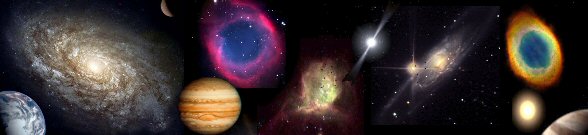
Deridian Solar System
The Deridian solar system contains five planets and orbits around a star on the outer arm of an elliptical galaxy Messier 60 (NGC 4649) in the Virgo cluster
| Home | Contents | Christchurch Business N.Z | International Business Directory | Australian & New Zealand Classified Directory | Business Opportunity |
Interstellar
Interstellar TravelMilky Way
Solar System
Planets
Constellations
Planet's
Solar Systems
Deridian Solar System
The bright elliptical galaxy Messier 60 (NGC 4649) in the Virgo cluster and its apparent spiral companion NGC 4647, shown in a color-composite view from exposures in B (blue) and I (near-infrared) filters with a Tektronix 800x800 CCD at the 2.1-meter telescope of Kitt Peak National Observatory. North is at the top and east to the left, for direct comparison with a chart or eyepiece view. The image has been rebinned to 512x512 for this presentation, which uses a logarithmic intensity transformation to preserve information across a wide dynamic range. The field is 2.5 arcminutes square.
This image was taken as part of a study of the dust content of spiral galaxies, by Bill Keel and Ray White III. If the spiral is in front, there's virtually no dust outside the optical bounds of the galaxy. In the elliptical, numerous globular clusters are apparent as the faint starlike objects around it, especially toward the spiral where the extra light gives their visibility a boost. The blue filter emphasizes the very different textures of spiral and elliptical systems, highlighting the young star clusters throughout the loose arms of NGC 4647.
The Solar System
Orbiting around a central star on the outer rim of one of the spiral arms of M60 we find the Deridian Solar System. The system contians five planets and one Asteroid that orbits the outer edge of the solar system. The deridian solar system is located in the constellation of virgo
System Components
Planet: Cara
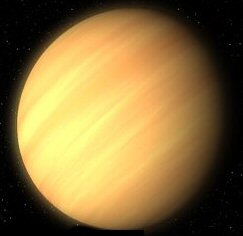
Cara Data File
Planet Surface:
This planet consists of deserts and there are a couple of caves that I saw on this planet but it mostly looked like a lot of sand banks .
Atmosphere:
This atmosphere is very hot and dry it is not compatible for humans.
Plant Life:
There are no plants on this planet
Water:
There is also no water on this planet
Life Forms:
No life Forms that I could see
Year Discovered:
2000
Detection Method:
Interstellar Travel
Discovered By:
Wingmaker732
Planet: Drankra
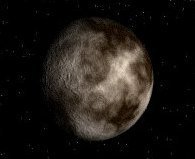
Drankra Data File
Planet Surface:
The planet consists mostly of deserts and lakes and rivers. The deserts have the lakes and rivers scattered all over the planet they aren't confined to one area of the planet
Atmosphere:
The air is just too dry and hot for humans to live on this planet.
Plant Life:
No plant life is on this planet
Water:
There are rivers and Lakes.
Life Forms:
There are no life forms
Life Forms:
There are no life forms
Year Discovered:
2000
Detection Method:
Interstellar Travel
Discovered By:
Wingmaker732
Planet: Silouta
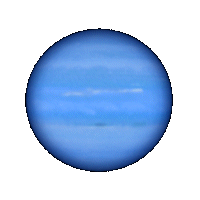
Silouta Data File
Planet Surface:
Was almost like a very large ocean with gigantic icebergs in it.
Atmosphere:
Very cold but the air was moist this time but still not compatible with Earths.
Plant Life:
There was no plant life or vegetation on this planet.
Water:
Lots of water and Ice.
Life Forms:
No life forms were found to be inhabiting this planet although i never looked below the surface on this planet. .
Year Discovered:
2000
Detection Method:
Interstellar Travel
Discovered By:
Wingmaker732
Planet: Moran
Moran Data File
Planet Surface:
Ice of different multitudes as well as it being different heights there were also caves and inside those caves there was ice of different colours. .
Atmosphere:
The atmosphere was too cold and dry to come anywhere near close to earths.
Plant Life:
There was no actively growing plant life on this planet but there was a plant trapped in ice deep inside one of the caves.
Water:
All water sources were frozen ice.
Life Forms:
No life forms
Year Discovered:
2000
Detection Method:
Interstellar Travel
Discovered By:
Wingmaker732
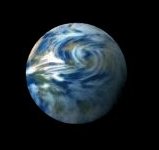
Planet: Deridia
Deridia Data File
Planet Surface:
Green in colour on first impressions but once on the surface there are all different things that you can't see on approaching like the small mounds of dirt and there was almost like a pyramid but it was just dirt with trees and bushes on it as well as some other plants.
Atmosphere:
A very close match.
Plant Life:
Bushes and trees mostly as well as some small purple plants and a strange coloured red flower.
Water:
There were small streams around as well as a lake in the middle of the planet.
Life Forms:
None that I could find on first inspection but they could have been under ground as in other planets I have encountered.
Year Discovered:
2000
Detection Method:
Interstellar Travel
Discovered By:
Wingmaker732
Asteroid
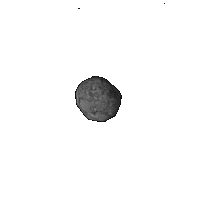
Asteroid Data File
Asteroid Surface:
Quite red in colour almost like molten rock.
Atmosphere:
Very hot to be around .
Size:
seemed to be almost a metre in its circumference and with quite a few craters on the surface that seemed to be about 20 - 30 cm in depth. Both of the asteroids were almost the same in description.
Year Discovered:
2000
Detection Method:
Interstellar Travel
Discovered By:
Traveller :Donna
Mapper : DarrynPlanetary Orbits In The Deridian System
Inspirational Writings
Greeting cards, poetry, santa letters, gifts books, and more!