← The Wingmakers Ways · not in the site's own index
Archived page · Asserted
Gliese 777A
universe_extrasolar_Gliese_777A.html · captured from wingmakers.co.nz
Gliese 777A
Orbiting around Gliese 777A in the constellation of Cygnus we find two extra solar planets orbiting. Gliese 777A b, 47 Gliese 777A c.
| Home | Contents | Christchurch Business N.Z | International Business Directory | Australian & New Zealand Classified Directory | Business Opportunity |
Interstellar
Interstellar TravelMilky Way
Solar System
Planets
Constellations
Planet's
Solar Systems
Overview
Gliese 777A B is more like our own system's Jupiter than any other planet so far discovered. It was the first giant planet of Jupiter mass discovered orbiting more than 3 AU from a sun-like star without any closer giant companions. This makes the Gliese 777A a prime hunting ground for earth mass planets closer in. Unlike the legions of Hot Jupiters and eccentric planets found around other stars, this planet reminds us of home.Speculations
Gliese 777A B's orbit is close to circular, like Jupiter's, and it's mass is only a little greater than Jupiter's. Although it's orbital distance is over an AU closer than Jupiter, at 3.65 AU it is still well outside the star's habitable zone. The calculated temperature of the planet is only 20 K greater than Jupiter, so its moons, some possibly as large as Mercury, would likely have icy surfaces with rocky cores. The planet itself would be girdled in white clouds of ammonia with, perhaps, clouds of water ice at lower depths. Like Jupiter and Saturn, these clouds would be stained with brown, yellow, and red hues created by the alchemy of trace gases in the sun lit upper atmosphere. Unless the planet has a significant axis tilt, seasonal variations would be minor.What's more interesting than the planet itself, however, is the lack of giant planets closer in. Other planets have been found in circular orbits at Jupiter-like distances from their stars, but none have been found without closer siblings. Certainly, if a another gas giant orbited closer to Gliese 777A, it would have been easier to detect than Planet b, and we would already know about it. But, no such planet has been found. The lack of a closer sibling means it is possible that one or more smaller terrestrial planets may exist. If one of these rocky worlds orbits within the star's habitable zone, then Gliese 777A may host a twin Earth as well as a twin Jupiter.
There is mounting evidence that Jupiter is vital to life on Earth. Like our moon, it appears to serve as an asteroid deflection system, gobbling up or deflecting worldlets that might otherwise impact our planet. If a twin Earth does orbit Gliese 777A, then Planet b may provide a similar service.
Gliese 777A is nearly seven billion years old, two billion years older than the sun. If the star does host an Earth-like world where life is possible, it has probably already evolved. What's more, there has been plenty of time for that life to evolve intelligence. But the possibility does not make it so, and time alone cannot give birth to a technical civilization.
At 50 light years away, the Gliese 777A system is already awash in radio signals from Earth. In all likelihood, no one is there to hear those signals. Even if the system does host an Earth twin, life there may never have evolved beyond it's most simplest forms, if at all. And, even if intelligence arose there sometime in the last two billion years, that intelligence has, in all probability, already gone extinct.
Location
Constellation:
Right Ascension:
20 03 37.4055
Declination:
29 53 48.500
Distance from Sol:
51.86 Light Years
Basic Data
Alternate Designations:
HD 190360A
HD 190360A
Spectral Type:
G6 IV+
Apparent Magnitude:
5.71
Mass:
0.9 Solar Masses
Radius:
1.2 Solar Radii
Effective Temperature:
5417 Kelvin
Habitability
Inner Edge of Habitability Zone:
0.52 AU
Outer Edge of Habitability Zone:
1.64 AU
Gliese 777A C
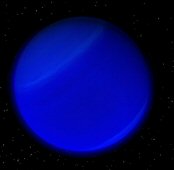
Gliese 777A C Statistics
Object Type:
Clarified Neptunian
Parent Star:
Gliese 777A (G6 IV+)
Discovery Status:
Confirmed
Mass ( M sin i ):
0.057 Jupiters
Mean Distance:
0.128 AU
Orbital Period:
17.1 Days
Eccentricity:
0.01
Planet Appearance:
Blue and cloudless
Estimated Mean Temp:
717 Kelvin
Mean Angular Star Size:
4.986 Degrees
Max Stable Prograde Moon Orbit:
0.001 AU / 180000 km
Max Moon Mass:
< 0.0001 Earths
1991.8656 x Phobos
Year Discovered:
2005
Detection Method:
Doppler Spectroscopy
Discovered By:
VOGT S., BUTLER P., MARCY G., FISCHER D., HENRY G., LAUGHLIN G., WRIGHT J. & JOHNSON A.
Gliese 777A B
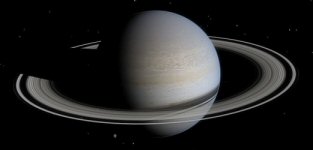
Gliese 777A B Statistics
Object Type:
Ammonia Cloud Jovian, Eccentric
Parent Star:
Gliese 777A (G6 IV+)
Discovery Status:
Confirmed
Mass :
1.33 Jupiters
Mean Distance:
4.8 AU
Orbital Period:
3902 Days
Eccentricity:
0.48
Planet Appearance:
White ammonia and water ice clouds, brown hydrocarbon stains
Estimated Radius:
0.998 Jupiters
Estimated Mean Temp:
117 Kelvin
Mean Angular Star Size:
0.132 Degrees
Max Stable Prograde Moon Orbit:
0.134 AU / 20090000 km
Max Moon Mass:
> 10 Earths 3
Year Discovered:
18 Jun 2002
Detection Method:
Doppler Spectroscopy
Discovered By:
M. Mayor, D. Naef, F. Pepe, D. Queloz, N.C. Santos, S. Udry
Planetary Orbits Around Gliese 777A
Inspirational Writings
Greeting cards, poetry, santa letters, gifts books, and more!