← The Wingmakers Ways · not in the site's own index
Archived page · Asserted
Vulcan
The_planet_Vulcan.html · captured from wingmakers.co.nz
Vulcan
Vulcan is also known as vesta and is located in the same spiral arm of the Milky Way galaxy as the our solar system known as the orions arm.The Mistori solar system is currently comprised of eight planets
Navigation
Solar System
Sun
Mercury
Venus
Earth
Mobius
Mars
Jupiter
Saturn
Uranus
Neptune
Pluto
2004 DW
Quaoar
Sedna
2002 AW197
2003 UB313
Comets
Meteorites
Asteroids
Planetary Moons
The Moon
Europa
IO
Ganymede
Titan
Tethys
Extra Solar Planets
Lensing Galaxy - Einstein Cross
Introduction
The planet Vulcan is located in the same spiral arm of the Milky Way as the Earth known as the orion arm. The Vulcan's solar system mistori is currently comprised of eight planets, Vulcan had several small iron-nickel moons know as Micar, Eckloc, and Pareniztan. Vulcan is also known as Vesta by some races.
The Third Planet 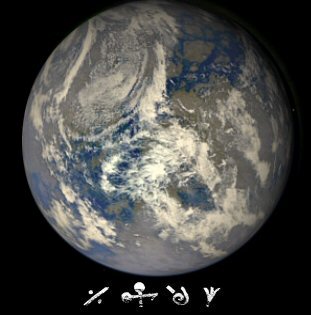
Welcome to planet Vulcan. It is a small, oceanic planet in the Mistori System also known as the Ionious Solar System. Vulcan is a warm planet containing plenty of moisture and sustaining a wide variety of life forms and bio zones. The rocky silicate crust permits unique and varied land formations to also exist . Vulcan has at least five climate zones, each very different from the others. The stable atmosphere makes Vulcan an excellent choice for cosmic travelers looking for a lush new habitation.
Vulcan is the third planet from the mistori sun. The distance of Vulcan from the sun, is 0.97 AU (Astronomical Units) and it takes Vulcan 0.96 earth years (Approximately 354 earth days) to orbit mistori. Vulcan is a planet containing plenty of waters on the surface and a good atmosphere that absorbs the energy from the Sun. Vulcan's atmosphere recycles water and other chemicals and sustains moderate climates that are suitable for a wide variety of life forms and bio zones.
Vulcan has several large tectonic plates that form the surface of the planet. The locations where the plates' collisions or subductions occur are called hot spots. In the hot spots, many active volcanoes exist and they shoot out hot magmas on the surface. This hot magma became the rocky continental crust and it permits unique and varied land formations. Accompanied by volcanic explosions, extremely dangerous earthquakes are generated occasionally. Although mistori is little bit warmer than the sun in the Solar system, temperatures on planet Vesta are very similar to those of Earth because it is located 0.97 AU from Hestia. Vesta has five major climate zones: tropical, tepid, temperate, glacial, and polar. Vulcan is made up of approximately 80% water and 20% land.
The Mistori / Ionious Solar System is located in the Arm of Orion in the Milky Way Galaxy. This solar system is composed of a sun and Eight planets. Vulcan is the third planet from the sun and has three moon called Micar, Eckloc, and Pareniztan.
Planetary Data File
Atmospheric Composition : Liquid Air Compound
Planetary Surface : sandy brown, Green & Blue in colour.
Water : Large bodies of water on the surface of vulcan.
Plant Life : Vegetation Mostly Forest.
Planetary Core : Iron core
Planetary Life Froms : Vulcan Greys
Parent Star: Q 0957+561
Planetary Number : Q 0957+563
Basic Data
Object Type: Oceanic Planet
Parent Star: Q 0957+561
Habitability: Planet at Earthlike Temperatures at Mean Orbital Distance
Year Discovered : 1996
Physical Data
Mean Distance: 0.97 AU
Orbital Period: Approximately 354 earth days
Orbital Data Of Vulcan
Vulcan's orbits around star Q 0957+561 is every 354 earth days.
When the mistori sun and our sun align every 11 years and vulcan passes directly in front of the mistori sun the lensing affect of lensing galaxy projects a shadow of vulcan upon the surface of our sun for years scientist have been trying to prove the exsistant of a planet orbiting around our sun and have never been able to find the ghost planet reason why they can not find vulcan in the meridian system is because there is no such planet we are just witnessing the aligning of two suns and the lensing galaxy in action.
An Artist Impression Of The Surface On Vulcan Mistori 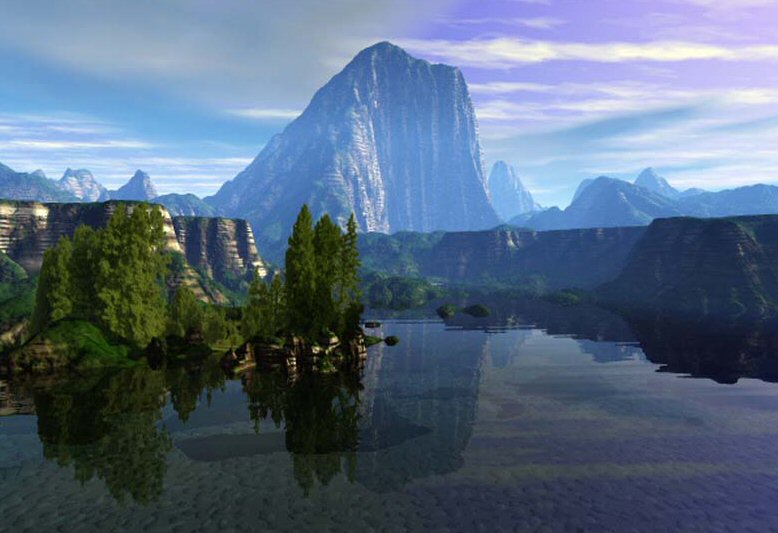
MOONS OF VULCAN : Micar, Eckloc, and Pareniztan
Vulcan is also known as Vesta by some races.
Planet Vulcan's Meteorology
Meteorology
The Mistori sun, is classified as a G0 star with temperatures measuring 6030 degrees Kelvin. The Earth sun is classified as a G2 star and measures at 5860 degrees Kelvin. Although Mistori is warmer than the sun, temperatures on Planet Vvulcan are very similar to that of Earth because it is located 1.34 AU from mistori. This places Planet Vulcan farther from mistori than Earth from the sun. Planet Vulcan has five major climate zones: tropical, tepid, temperate, glacial, and polar. Planet Vesta is made up of approximately 80% water and 20% land.
Surface/Ocean Currents
Surface currents near the central girth of Planet Vulcan normally flow from east to west, but surface currents closer to the poles tend to flow from west to east. The directional flow of the surface currents is due to Planet Vulcan global winds, the rotation of the planet, and the deflection of currents when they meet the continents. Surface currents are also affected by the temperature of the water. Warm-water currents begin near the central girth and carry warm water towards the poles to other parts of the ocean. Cold-water currents begin closer to the poles and carry cool water towards the central girth and other parts of the ocean. Tides, rain, runoff, and ocean bottom activities also affect the surface currents of Planet Vulcan.
Atmospheric Pressure and Wind
Solar energy, along with the rotation of the planet, influences the atmospheric pressure and wind currents on Planet Vulcan. Planet Vulcanreceives more direct solar energy from mistori at the central girth than at the poles. The solar energy causes the air to be warmer and less-dense at the central girth than the air at the poles. Warm and less-dense air at the central girth rises and creates an area of low pressure. The air at the poles is colder, more dense, and heavier. The sinking air creates areas of high pressure. The differences in atmospheric pressure at the central girth and at the poles cause air to flow. The air moves from areas of high pressure to areas of low pressure, which means winds normally flow from the poles to the central girth. The rotation of the planet causes the winds north of the central girth to curve to the right. These winds move from the northeast to the southwest. Wind south of the central girth curve to the left and flow from the southeast to the northwest.
Climate Zones
As discussed earlier, although mistori's sun is a warmer star than the Earths sun, temperatures on Planet Vulcan are very similar to that of Earth because it is located 1.34 AU from Hestia. This places Planet Vulcan farther from mistori than Earth from the sun. Planet Vulcan has five major climate zones: tropical, tepid, temperate, glacial, and polar. Each zone has a temperature range that relates to its latitudinal location and its exposure to the sun. However, in each of these zones there are several types of climates due to differences in geography and the amount of precipitation.
Rainfall
The formation of rain on Planet Vulcan is similar to that on Earth. Rain is water in liquid form that falls from the clouds to Vulcan. Solid forms of rain, also known as snow on Earth, also exist on Vulcan. Topography affects the amounts of precipitation different regions receive. Land of higher elevation normally experiences more precipitation than land of lower elevation. Therefore, the average yearly precipitation on Planet Vulcan varies greatly within each climate zone.
History Of Vulcan
Vulcan is somewhat older than the Earth, geologically speaking. Scientists have estimated that Vulcan is nearly five hundred million years older. The planet itself evolved quicker than Earth because of the effects in its system. The Vulcans' planet is larger than Earth. The gravity is noticeably higher. There is little seasonal variation on the planet Vulcan due to an almost circular orbit around Q 0957+561 and the very slight tilt on its axis. Vulcan orbits around the mistori sun at a mean orbital distance of 5.198 AU
Vulcan is an o ceanic planet . The oceans of the planet cover a substantial part of the surface at their maximum, although it is unknown to what extent because vulcanism on Vulcan has obliterated most traces of an oceanic past. Vulcan had an Age of Great Reptiles. These creatures were similar to the dinosaurs of Earth or the ancestors of the Gorns. Vulcan never did have such a great variety of species because of severity of the climate. Because of vulcanism and severe geological upheavals, the fossil record on Vulcan is very thin. There are often only single specimens of an extinct species. The fossil record on Earth is hundreds of times richer. Conditions were always tough and all lifeforms on Vulcan are strong and adaptable. there are four main continental regions. The evidence of this can be seen in the massive high plateau regions that remain to this day.
The Great Reptiles died out during a period of intense solar flares in the distant past and smaller animals took over. Again, there was never a great variety of creatures. The earliest identified ancestor of the Vulcans was a creature called the "cat-ape" by some Federation paleontologists. Modern Vulcans still possess some qualities of a quasi-feline predator past; many have noticed the strength, reflexes and fluid movement.
Early vulcanoid life evolved on the vast grasslands that once covered the low plains of the planet. By the time of the rise of true intelligence in these Vulcan ancestors, the forests or jungles existed. Only in prehistoric times did large plant-forms thrive. Because of their evolution in a savannah in some regents of the planets environment, the Vulcan ears and eyes developed into quite sensitive instruments to facilitate hunting and survival in tall grasses. Prehistoric Vulcans mostly kept away from the mountainous, volcanic areas of their planet, due to the dangerous conditions caused by continual eruptions.
The Vulcans learned to use fire at an early stage. This is no real surprise on a volcanic planet. The people were constantly exposed to fire and lava. Violent electrical storms also started huge range fires in the grasslands. The planet itself was very rich in many minerals and metals. The Stone Age of Vulcan was relatively short. Metal tools and weapons came about quite soon because of easy access to high-grade ores. Unfortunately, usable iron ore was quite rare and there was never a prehistoric Iron Age. Wars over territory containing iron ore were continuous. Copper is very common on Vulcan, though. The blood chemistry of Vulcan life is based on copper, not iron, hence the green blood that is so famous. A similar thing happened with the Andorians and their cobalt-based blood chemistry. Thus, copper was the basis of Vulcan metallurgy. Grasses were used as thatch for roofing.
In historical times, there were no longer any large land animals like elephants or giraffes on Vulcan. Large herds of smaller grazing animals were domesticated, though. Some animals became pets and beasts of burden, while others were eaten. Simple agriculture developed early, but the conditions supported nomadic life much better.
Although there is very little speciation on Vulcan, there are two races of Vulcans -- a light-skinned grey race that dominated the Northern Hemisphere in prehistoric times and a dark-skinned grey race from the Southern Hemisphere. Most Vulcans have black hair, which greys with age, but some Vulcans have a recessive gene for a reddish-colored hair. In some rural areas, this reddish hair is common. Though there were often bloody struggles over territory, Vulcan has not been burdened with racial prejudices in historical times. Vulcans often find it very difficult to understand the problems Earth and other worlds have had because of different races.
As civilization developed, fortified urban centers spread across the face of Vulcan. Most of the Vulcans at this time remained nomadic, somewhat like the tribes of the Sahara desert on Earth several hundred years ago. The now common desert conditions in certian areas of vulcan slowed the development of Vulcan civilization and a long stagnant period began. conditions caused the Vulcans to become strong and survive.
The Milky Way Galaxy
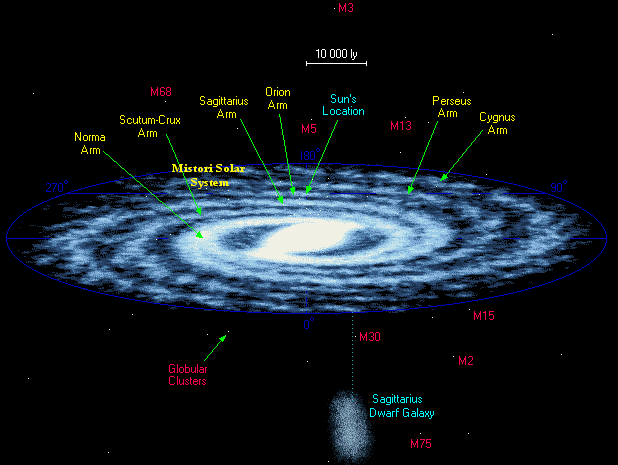
Our home galaxy is100,000 light years across. The Sun lies 20,000 ly from the center in the Orion arm.
Vulcan In Mythology
The god of the forge, of fire and craftsmanship, was named Hephaestus by the Greeks and Vulcan by the Romans. He is commonly believed to be the son of Zeus and Hera, although in some versions of his story he had no father, with Hera bearing him alone in retaliation for Zeus having brought forth Athena. Hephaestus� mother, seeing that he was ugly and deformed, hated him on first sight and cast him from Olympus. He fell for a entire day and night, landing on Lemnos, where he broke his legs and became lame. The
sea-goddess Thetis found the crippled infant on the beach and took him to her underwater grotto and raised him with the help of Eurynome, mother of the Graces. Hephaestus� limitations became his challenge. To regain his rightful place on Olympus among the gods, Hephaestus built a golden throne and sent it to Hera as a gift. When she sat on it, its golden arms promptly clamped together, imprisioning her. To reclaim her freedom Hera had to extract a promise from all the gods on Olympus that Hephaestus would be accepted into the Pantheon. Hephaestus became the smith and manufacturer of art, arms and armor for gods and heros, using a volcano as his forge. He married Aglaia, one of the Graces; others claim that he married Aphrodite.
Astronomically, Vulcan is known as the � Ghost Planet,� the celestial body closest to the Sun, circling inside the orbit of Mercury. This is not the case vulcan orbits the parent star Q 0957+561 In the Mistori Solar System. When the mistori sun and our sun align every 11 years and vulcan passes directly in front of the mistori sun the lensing affect of lensing galaxy projects a shadow of vulcan upon the surface of our sun that is why we have never detected the planet orbiting our sun.
Vulcan's Orbit Around The Q 0957+561
Copyright © Wingmakers.co.nz - All rights reserved.